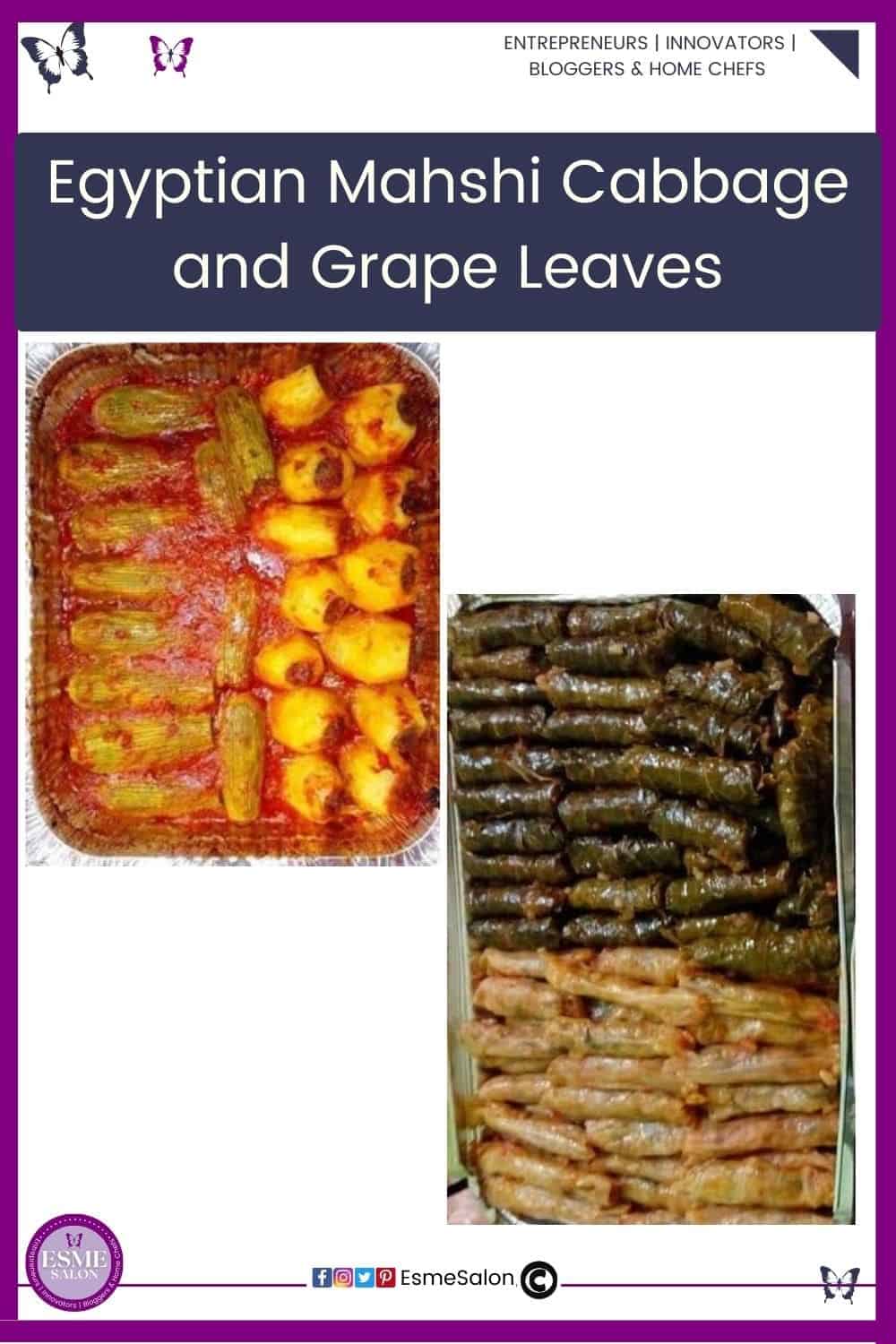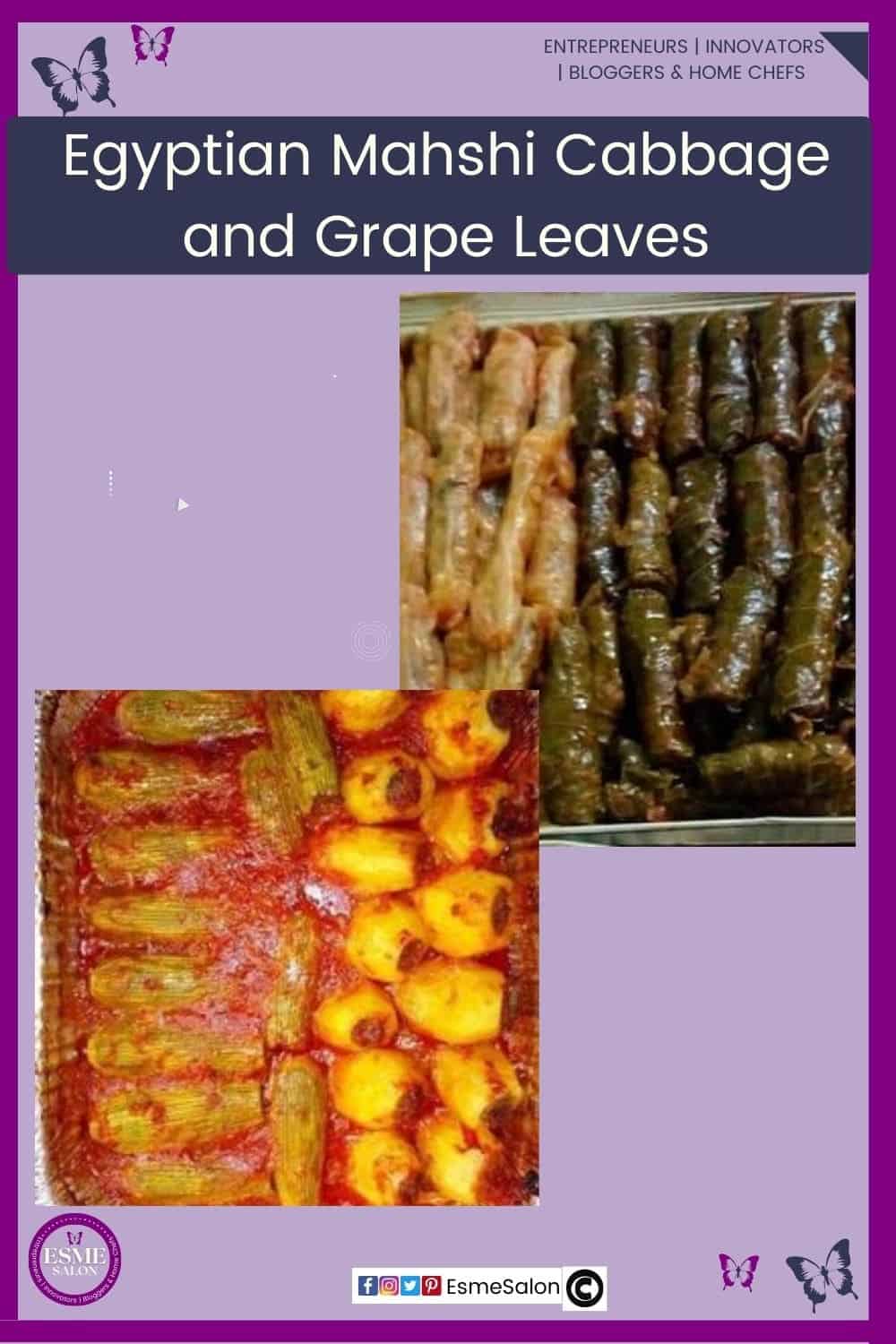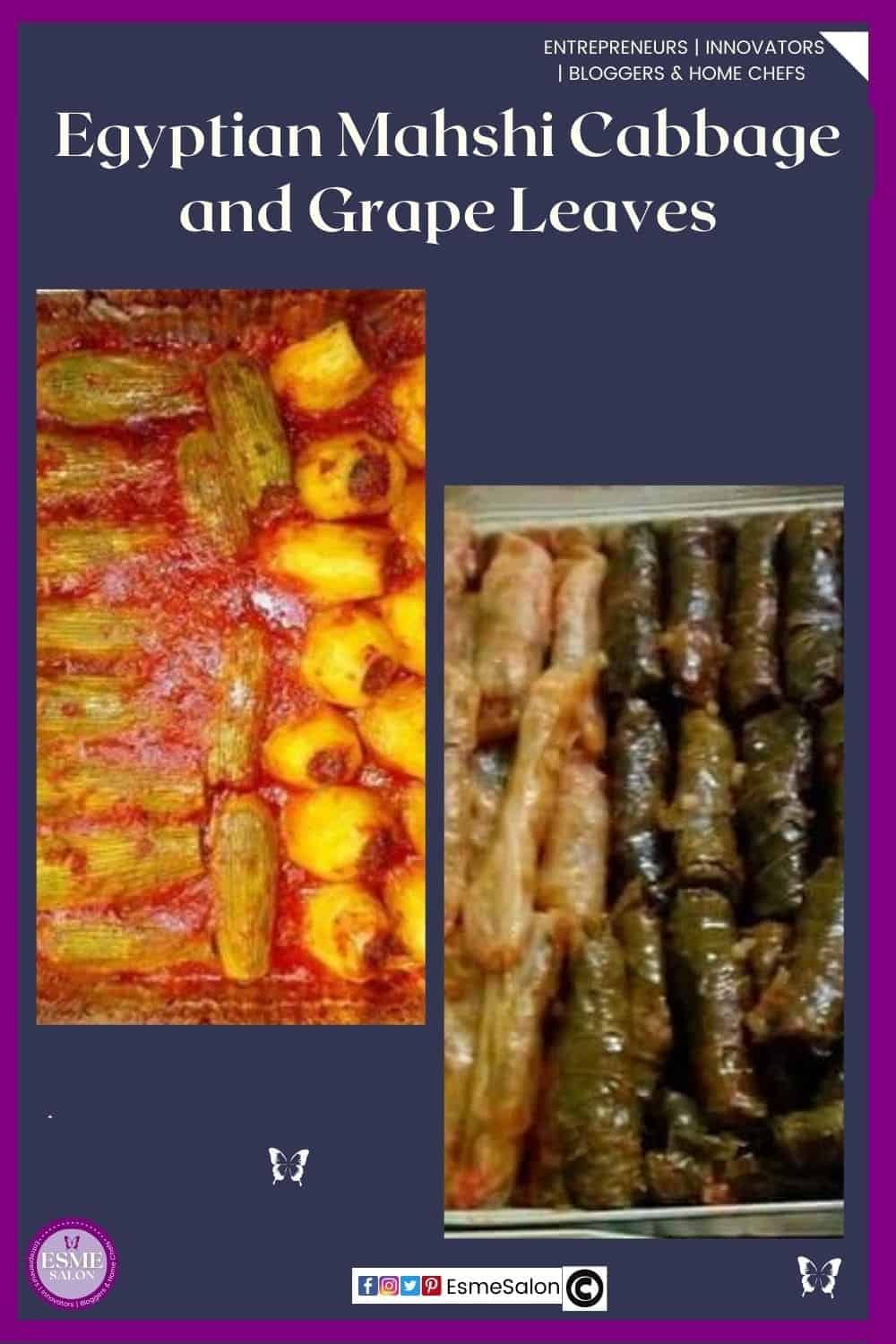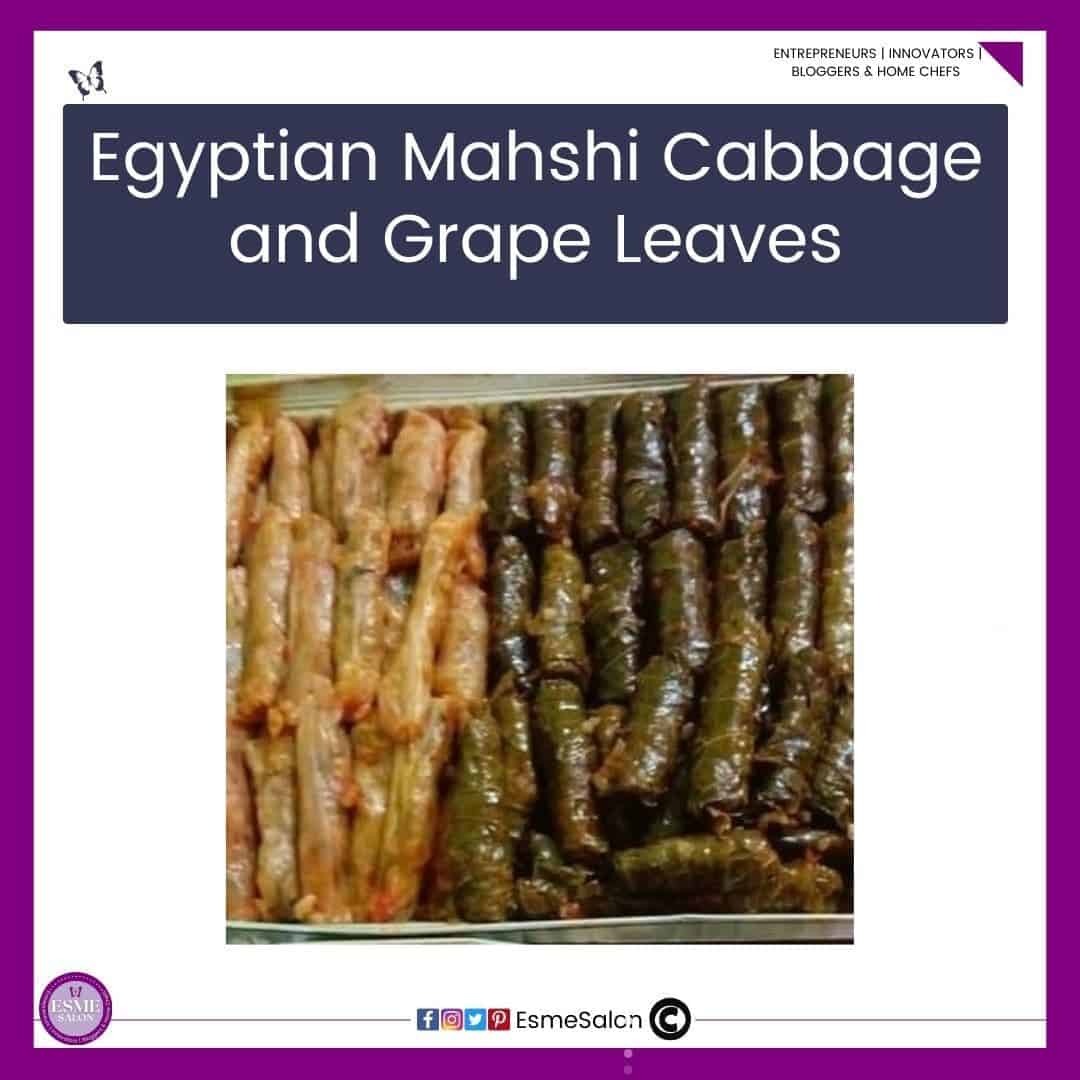
Description
Eat Like an Egyptian and Taste the Best of Egypt’s Cuisine!
Ingredients
Units
Scale
- 2 medium cabbage heads or grape leaves
- 3 cups of rice preferably short grain
- 1 cup chopped cilantro
- 1 cup chopped parsley
- 1 cup chopped dill
- 2 medium onions
- 6 tomatoes
- 2 tbsp of tomato paste
- 1 chicken stock cube
- 6 cups of chicken broth or duck broth (vegetable broth for vegans)
- 1 spicy pepper
- 3 tbsp olive oil
- 2 tsp salt
- 1/2 tsp pepper
Instructions
Prepare the Cabbage Leaves
- Heat a very large pot of water on the stovetop.
- Cut into the cabbage head about 2 inches deep, removing the center of the cabbage. It will take a little bit of time to do.
- Put the whole head into the boiling water. Be careful to lower slowly so that the water doesn’t splash.
- Using 2 forks, peel the outer layer of the cabbage and set it aside.
- Repeat with the other cabbage head.
- An alternative way of preparing the cabbage is to remove the cabbage leaves prior to cooking. Then boil the leaves until they are tender.
Make the Rice Stuffing
- In a food processor, blend 2 peeled onions.
- The onions will be more grainy than if you had put them in the blender. This is the texture we want.
- In a blender, blend the tomatoes to a pulp. Strain the tomato mixture into a bowl.
- Chop dill, parsley, and cilantro into fine pieces. Set aside.
- Add a pot to the stovetop.
- Add olive oil and turn the heat to medium-high.
- Add the onion mixture and cook for about 10 minutes.
- Add the strained tomato mixture, bouillon cube, and tomato paste.
- Add salt and pepper to taste.
- Cook for 10 minutes covered.
- Add the chopped parsley, dill, and cilantro. Add the rice. Turn the heat to low. Cover and cook for 5 minutes.
- Remove rice from heat and allow to cool off. I usually put the rice into another bowl to cool faster.
Roll the Stuffed Cabbage Leaves
- On each cabbage leave, cut out the rigid stem.
- The cut will look like an elongated triangle.
- For the largest leave, you will cut the cabbage leaf into 3 sections.
- For medium cabbage leaves, you will cut them into 2 sections, and for the smallest cabbage leaves, you will not cut them at all.
- In a large pot, place cabbage stems and some of the smallest cabbage leaves on the bottom.
- This layer protects the bottom rolled cabbage leaves from burning when cooking.
- Put about 1 tbsp of the rice mixture at the end of the cabbage leaves. Roll and tuck in the sides.
- Place the rolled cabbage leaves in the pot making a circle, going layer by layer.
- Place the rolled cabbage leaves with the seam down to prevent them from unraveling.
- Once all the leaves have been rolled, slice a spicy pepper and add to the top.
Cook the Rolled Leaves
- Add a small plate face-down onto the cabbage leaves. This helps the leaves from unraveling while they are cooking.
- Add roughly 6 cups of boiling broth, or until the liquid completely covers the stuffed cabbage rolls.
- Turn the stovetop to medium-high heat and cover.
- Cook for 10 minutes.
- Crack the lid on the pot to allow steam to escape.
- Cook for about 15 to 20 minutes or until the rice is cooked.
PS: it can be made completely vegetarian as well.
- Very time-consuming but worth the effort.
- I usually make tons of it and freeze it. Freezes beautifully.
- Can be used for other vegetables such as peppers, potatoes, tomatoes, and married but I don’t recommend freezing these.
Notes
Prepared, tried, and tested by Khadija from The Recipe Hunter: Tried and Tested Recipes from Home Chefs
Nutrition
- Serving Size: 3
- Calories: 109
- Sugar: 5.5 g
- Sodium: 554.4 mg
- Fat: 2.8 g
- Carbohydrates: 19.1 g
- Fiber: 3.7 g
- Protein: 3.9 g
- Cholesterol: 1.9 mg